

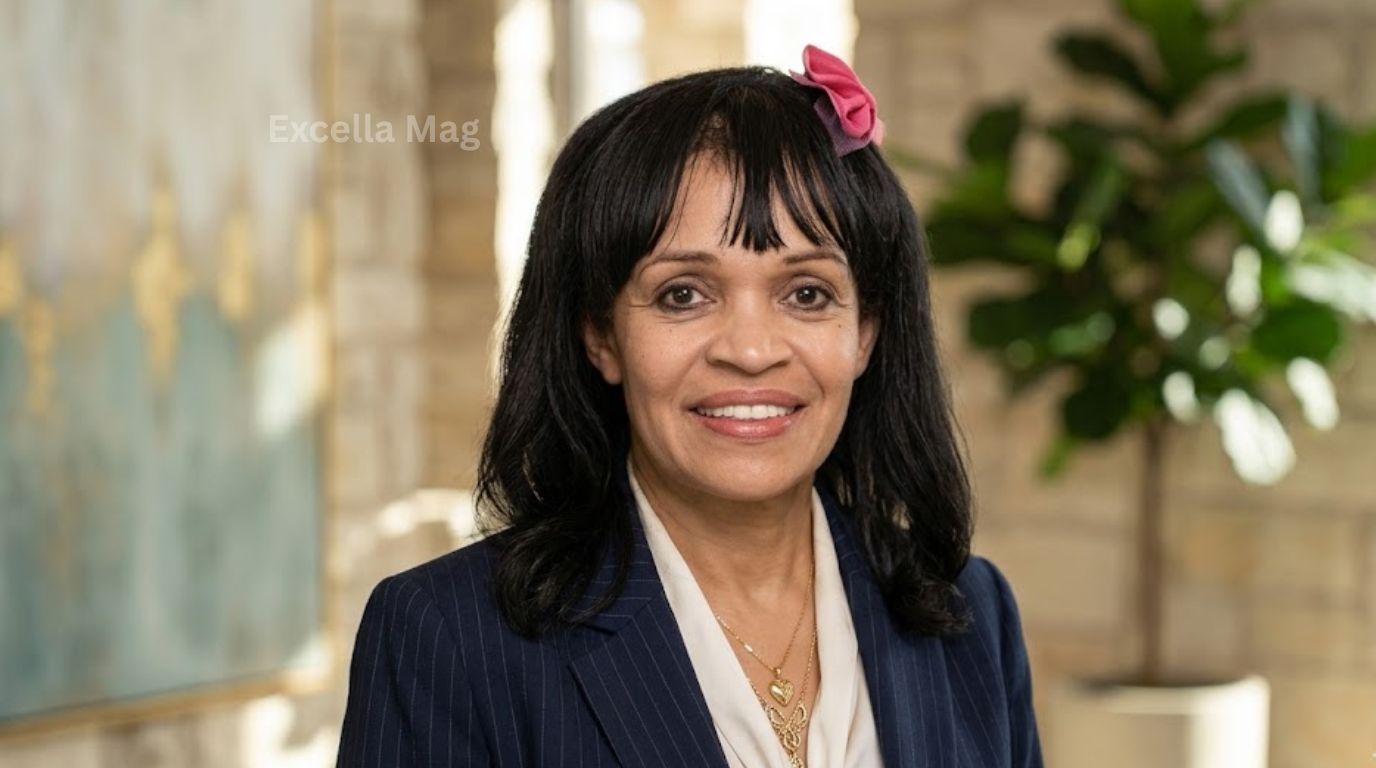
Some people shape history not by standing at a podium or casting a vote, but by quietly holding everything together behind the scenes. Dorothy Bowles Ford is one of those people. She never ran for office. She never sought a headline. And yet, without her, the story of one of Tennessee’s most powerful political families would look entirely different.
Most people know her name only because of who she married — Harold Ford Sr., the first African-American congressman from Tennessee — or who she raised — Harold Ford Jr., the former U.S. Representative and political commentator. But the more you look at Dorothy’s life, the more you realize she deserves her own chapter in that story. Her journey, from the streets of Memphis during the Civil Rights era to the corridors of Washington D.C., is one of quiet strength, personal sacrifice, professional achievement, and lasting influence. This biography takes a closer look at who Dorothy Bowles Ford really is.
Early Life: Growing Up in Memphis, Tennessee
Dorothy Bowles Ford was born in 1949 in Memphis, Tennessee — a city that, at the time of her childhood, was alive with both cultural richness and deep social tension. Memphis in the late 1940s and through the 1950s was a city standing at a crossroads. It was home to blues music, a thriving Black middle class, and also the heavy weight of racial segregation. For a young African-American girl growing up in that environment, life carried both beauty and hardship in equal measure.
Dorothy was raised in a community that placed enormous value on faith, hard work, and education. While the specific details of her parents and immediate family background have remained private — something she has maintained throughout her life — what is clear is that her upbringing instilled in her a sense of responsibility and moral grounding that would define every chapter of her adult life. She grew up as an only child, a circumstance that may have contributed to the independence and self-reliance that people who knew her would later describe.
The Memphis of her childhood was also the Memphis of the Civil Rights Movement. Protests, marches, and community organizing were not distant news events — they were part of the fabric of daily life. Dorothy grew up watching people fight for dignity, equality, and basic human rights. That context is not incidental to who she became. It likely shaped her commitment to public service, her belief in the value of civic engagement, and the principles she would later pass down to her children.
Education: Memphis State University and the Choices She Made
Dorothy Bowles Ford pursued higher education at Memphis State University, now known as the University of Memphis, one of the city’s prominent institutions with deep roots in the African-American academic community. Her enrollment there was a reflection of her intellectual ambition and her desire to build a life beyond the limitations her generation was often expected to accept.
However, she did not complete her degree. This is a fact that several biographies mention in passing, but few take the time to actually understand. Leaving university was not a failure — it was a decision shaped by the times and by personal circumstances that were common for women of her generation. In the late 1960s, many young women, particularly those entering marriages and starting families early, found themselves making choices between academic credentials and family commitments. For Dorothy, that choice came when her relationship with Harold Ford Sr. became more serious and the expectations of being a political partner began to take shape.
What is remarkable is what she built despite never holding that degree. Her professional career, her ability to navigate Washington’s complex political landscape, and her effectiveness as both a mother and a community figure all demonstrate that education, in its truest sense, comes in many forms. Dorothy’s lived experiences, her professional development, and her engagement with real-world challenges made her far more capable than a diploma alone could have. She is, in many ways, a testament to the idea that formal credentials and genuine capability are not always the same thing.
Marriage to Harold Ford Sr.: A Partnership Forged in Politics
On February 10, 1969, Dorothy Bowles married Harold Eugene Ford Sr., a young and ambitious man from Memphis who was already building the political foundation that would carry him to historic heights. At the time of their marriage, Harold Ford Sr. was just beginning his career — he would go on to serve in the Tennessee State Legislature before winning a seat in the U.S. House of Representatives in 1974, becoming the first African-American from Tennessee ever elected to Congress.
Their marriage placed Dorothy at the center of a story much larger than either of them had perhaps imagined. Being the wife of a rising political figure in the American South during the 1970s was not a glamorous or easy role. It required sacrifice, adaptability, and a particular kind of emotional strength. Campaign seasons were long and exhausting. Harold Sr.’s work in Washington D.C. meant extended absences. And as his career grew, so did the pressures placed on the family — the scrutiny, the expectations, and the constant balancing act between public life and private family needs.
Dorothy handled all of it with a composure that people around her consistently noted. She supported Harold Sr.’s campaigns actively — writing personal thank-you notes to volunteers, attending community events, and serving as an administrative presence in his congressional office. But she was not merely a political accessory. She was a thinking, working partner who understood the community Harold represented and cared deeply about its welfare. Her involvement was always grounded in genuine commitment to the people of Memphis and Tennessee, not just loyalty to her husband’s ambitions.
Her Career: More Than Just a Politician’s Wife
One of the most overlooked aspects of Dorothy Bowles Ford’s story is her professional career — a career she built entirely on her own terms, separate from her husband’s political life. Dorothy worked at the Potomac Electric Power Company (PEPCO), a major utility company serving the Washington D.C. metropolitan area. Her role there was that of a consumer coordinator and functions regulator, a position that required strong organizational skills, clear communication, and the ability to handle complex regulatory matters involving public services and energy management.
This is not a minor footnote. The fact that Dorothy maintained an independent professional identity throughout her marriage is significant, especially in the context of the 1970s and 1980s when the expectation for political wives was often to stand back and support, not to build careers of their own. Her work at PEPCO connected her directly to the concerns of everyday people — utility access, consumer rights, and the kind of practical civic issues that don’t make headlines but matter enormously to real families.
Beyond PEPCO, Dorothy also worked in an administrative capacity connected to Harold Ford Sr.’s congressional office, and she is documented to have worked with the U.S. Department of Agriculture on efforts to improve school lunch programs in Tennessee. That specific contribution — working to ensure that children in her home state had access to proper nutrition — speaks volumes about her values and her understanding of what public service actually looks like in practice. It wasn’t about power or prestige. It was about making things better for people who needed it.
Life as a Political Spouse: Balancing Family and Washington
Living as the wife of a congressman comes with dimensions that most people never fully appreciate from the outside. Harold Ford Sr. served in the U.S. House of Representatives for 22 years, from 1975 to 1997, representing Tennessee’s 9th Congressional District. For the vast majority of that time, Dorothy was by his side — not always visibly, but always present and always relevant.
During those decades, she raised three sons: Harold Ford Jr., born on May 11, 1970; Newton Jake Ford; and Sir Isaac Ford. Raising three boys while managing a household that regularly moved between Memphis and Washington D.C., while supporting a husband under constant political scrutiny, is not something that can be reduced to a simple sentence. It required an enormous amount of daily effort, emotional intelligence, and personal resilience. Harold Jr. has spoken publicly about the values his parents instilled in him — discipline, education, a sense of civic responsibility — and those values didn’t emerge from political speeches. They came from the home Dorothy built and maintained.
There were also harder moments. Harold Ford Sr. faced a federal indictment in 1987 on bank fraud charges, a legal battle that dragged on for years before he was ultimately acquitted in 1993. The stress of that period — the public scrutiny, the uncertainty, the pressure on the family — would have tested anyone. Dorothy navigated it with the same quiet steadiness that characterized her entire approach to life. She did not become a public spectacle. She did not collapse under the weight of it. She continued to hold the family together, and in doing so, protected her children’s futures.
The Divorce: A Private End to a Very Public Partnership
After thirty years of marriage, Dorothy Bowles Ford and Harold Ford Sr. divorced in 1999. The divorce was finalized quietly — there were no public statements, no dramatic revelations, and no media spectacle. In the same year, Harold Sr. married Michelle Roberts, who would later become the executive director of the National Basketball Players Association (NBPA), adding another chapter to a life that continued to intersect with American public life.
For Dorothy, the divorce marked the end of a chapter that had defined most of her adult life, but it did not define what came next. She chose, as she had always done, to remain private. She did not seek public sympathy or share her version of the story with journalists. She simply continued to be a mother, a community member, and a person of quiet dignity. That restraint, in an era when public airing of private grievances had already become a cultural staple, was itself a kind of statement.
Importantly, Dorothy has not remarried since the divorce. She has maintained a private life, focusing on her children, her grandchildren, and her community connections in Memphis. The absence of public drama around her life after the divorce is, in its own way, consistent with everything she had always been — a person who valued substance over spectacle.
Her Children: The Legacy She Raised
If there is one measure of Dorothy Bowles Ford’s life that speaks loudest, it is her children. She raised three sons who each, in their own ways, carried the values she instilled in them into the world.
Harold Ford Jr. is the most publicly recognized. He succeeded his father in Congress in 1997 and represented Tennessee’s 9th Congressional District until 2007. He went on to serve as a visiting professor at Vanderbilt University, chair the Democratic Leadership Council, work in financial services in New York City, and build a career as a political commentator on national television. He married Emily Threlkeld in 2008, and the couple have two children. His career reflects a man who was raised to think carefully, speak clearly, and serve genuinely — qualities that trace directly back to his mother’s influence.
Newton Jake Ford also entered public life, serving as a member of the Tennessee State Senate as a Democrat and running for Congress in 2006 as an independent candidate. Sir Isaac Ford attempted a run for the Memphis City Council in 2003. Neither Jake nor Isaac achieved the political heights of their father and brother, but both reflect a family culture in which civic engagement was considered a natural extension of responsible living — a culture Dorothy helped create.
Community Involvement and Civil Rights Legacy
Dorothy Bowles Ford’s connection to the Civil Rights Movement was not merely biographical — it was operational. Growing up in Memphis, she came of age during one of the most active periods in the history of African-American civil rights, and she carried that awareness into her adult life through sustained community engagement.
She participated in local initiatives focused on youth development, education access, and civic awareness. She supported programs that encouraged young people in Memphis to stay engaged with their communities and to see public service as a meaningful path. Her mentoring of younger generations, her involvement in education-focused community projects, and her work connected to the Department of Agriculture’s school lunch programs all reflect a woman who understood that social change happens at the ground level — through school lunches, through community organizing, through raising children who believe the world can be better.
Her contribution to this ongoing work was never celebrated at a national level. She received no medals and held no formal titles. But the kind of consistent, grounded community investment she represented is, in many respects, more durable than anything that fits on a résumé.
Net Worth and Financial Standing
While specific financial figures for Dorothy Bowles Ford are not publicly confirmed, estimates based on her professional background and family connections suggest a net worth in the range of $500,000 to $1 million. She built financial stability through her career at PEPCO and her administrative roles connected to Harold Ford Sr.’s congressional work. Her eldest son Harold Ford Jr. has an estimated net worth of approximately $3 million, built through his career in finance and media. Dorothy’s financial standing reflects the trajectory of a woman who worked consistently and lived modestly, without ever seeking wealth as an end in itself.
Where Is Dorothy Bowles Ford Today?
As of 2026, Dorothy Bowles Ford lives a deliberately private life. She remains connected to her family — particularly her grandchildren — and to the Memphis community where her story began. She has not re-entered public life in any formal capacity since her divorce, and she shows no indication of seeking the spotlight that her husband and son occupied for so many years.
She is in her mid-70s now, and by all accounts she carries the same values and the same quiet dignity she has always had. People who know her describe a woman who is gracious, grounded, and deeply committed to the people she loves. She still attends family gatherings and community events, still mentors younger people when the opportunity arises, and still represents, simply by living the way she lives, a kind of integrity that is increasingly rare.
Frequently Asked Questions (FAQ)
Who is Dorothy Bowles Ford? Dorothy Bowles Ford is an American woman best known as the former wife of Harold Ford Sr., the first African-American congressman from Tennessee, and the mother of Harold Ford Jr., a former U.S. Congressman and political commentator.
When was Dorothy Bowles Ford born? She was born in 1949 in Memphis, Tennessee, making her approximately 76 years old in 2026.
Did Dorothy Bowles Ford attend college? Yes. She enrolled at Memphis State University (now the University of Memphis) but did not complete her degree due to personal and family responsibilities.
Where did Dorothy Bowles Ford work professionally? She worked at Potomac Electric Power Company (PEPCO) as a consumer coordinator and functions regulator. She also worked administratively in Harold Ford Sr.’s congressional office and collaborated with the U.S. Department of Agriculture on school nutrition programs in Tennessee.
When did Dorothy Bowles Ford and Harold Ford Sr. get married? They were married on February 10, 1969.
When did Dorothy Bowles Ford and Harold Ford Sr. divorce? They divorced in 1999 after thirty years of marriage.
Did Dorothy Bowles Ford remarry after the divorce? No. As of 2026, there is no confirmed public record of her remarrying after her divorce from Harold Ford Sr.
How many children does Dorothy Bowles Ford have? She has three sons: Harold Ford Jr. (born May 11, 1970), Newton Jake Ford, and Sir Isaac Ford.
What is Dorothy Bowles Ford’s net worth? Estimates suggest her net worth is between $500,000 and $1 million, based on her professional career and financial background.
Is Dorothy Bowles Ford still alive? Yes, as of 2026, Dorothy Bowles Ford is alive and living privately in Memphis, Tennessee.
What was Dorothy Bowles Ford’s role in Harold Ford Sr.’s political career? She actively supported his campaigns, worked in an administrative capacity in his congressional office, and served as a key community liaison. Her contributions were largely behind the scenes but consistently meaningful.
What is Dorothy Bowles Ford’s ethnicity? She is African-American, born and raised in Memphis, Tennessee.
Conclusion
Dorothy Bowles Ford’s story is one that American culture doesn’t always know how to tell. It doesn’t fit the familiar template of the celebrated public figure. There’s no dramatic arc of rise and fall, no media tour, no bestselling memoir. What there is, instead, is something arguably more valuable — a life lived with consistent integrity, a family raised with purpose, a community served with genuine care, and a legacy that lives on in the careers and values of the people she helped shape.
She is proof that influence doesn’t require a microphone. That history is made not only in Congress chambers and television studios but also in the daily choices of a woman who decided, again and again, to show up with grace and to build something worth leaving behind. Memphis produced a political dynasty. But it was Dorothy Bowles Ford who gave that dynasty its foundation.
Read More: Kendall Jenner Nuxe Review: Is This Celebrity Beauty Favorite Really Worth It?

