

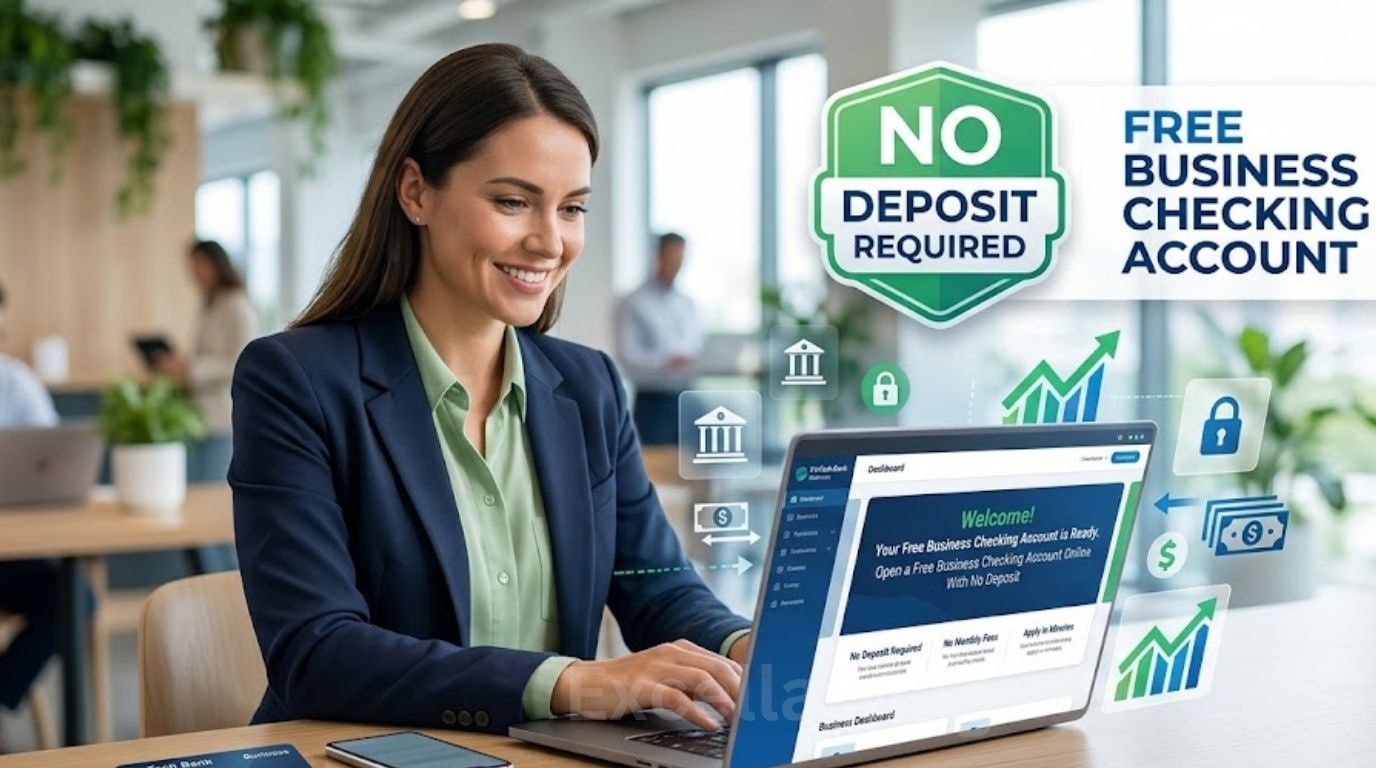
Starting a business comes with countless expenses. From registering your company and purchasing equipment to marketing and software subscriptions, every dollar matters. That’s why many entrepreneurs search for ways to reduce upfront costs wherever possible. One option gaining popularity is opening a free business checking account online with no deposit requirement.
For startups, freelancers, online sellers, and small business owners, traditional business banking can sometimes feel restrictive. Many banks require an opening deposit, monthly maintenance fees, or minimum balance requirements that can be difficult to meet when a business is just getting started. Fortunately, several financial institutions now offer business checking accounts that can be opened online without an initial deposit.
This guide explains how these accounts work, who they are best suited for, their advantages and limitations, and what you should consider before choosing one.
Why a Business Checking Account Matters
Many new entrepreneurs begin by using their personal bank account for business transactions. While this may seem convenient, it often creates complications when managing finances, preparing taxes, and tracking expenses.
A dedicated business checking account separates personal and business finances. This separation makes bookkeeping easier, enhances professionalism, and helps establish financial credibility for future growth opportunities.
In addition, business checking accounts often provide features specifically designed for companies. These may include business debit cards, accounting software integrations, invoicing tools, expense tracking, ACH transfers, and payment processing capabilities.
Having a dedicated account also helps when applying for business loans, seeking investors, or preparing financial reports. Lenders and investors generally expect organized financial records that clearly distinguish business activity from personal spending.
What Does “No Deposit Required” Mean?
Many people misunderstand the term “no deposit required.” It does not necessarily mean the account will never need money. Instead, it means you can complete the account opening process without making an initial deposit during registration.
Traditionally, banks often required deposits ranging from $25 to $500 to activate a business account. Modern digital banking platforms have removed this requirement, allowing entrepreneurs to open an account immediately and fund it later when needed.
This flexibility is particularly useful for:
- New startups
- Freelancers
- Independent contractors
- E-commerce businesses
- Side hustles
- Content creators
- Remote service providers
The ability to open an account without upfront funding allows business owners to establish their banking infrastructure before revenue starts coming in.
Benefits of Opening a Free Business Checking Account Online
One of the biggest advantages of online business banking is accessibility. Instead of scheduling appointments and visiting physical branches, business owners can complete the entire application process from their computer or smartphone.
Free business checking accounts with no deposit requirements often include several valuable benefits.
First, they reduce startup costs. New businesses can preserve cash flow while still gaining access to professional banking services.
Second, many online banks eliminate monthly maintenance fees. This helps small businesses avoid recurring expenses that gradually eat into profits.
Third, online banking platforms frequently provide modern digital tools that simplify business management. These tools may include automatic expense categorization, real-time transaction notifications, digital invoicing, and integrations with accounting software.
Another major advantage is speed. Many online banking providers approve applications quickly, allowing businesses to begin banking operations within days rather than weeks.
Who Should Consider a No-Deposit Business Checking Account?
Not every business has the same banking needs. However, no-deposit business checking accounts can be especially valuable for entrepreneurs who prioritize flexibility and affordability.
Freelancers often benefit because their income may fluctuate from month to month. Avoiding minimum balance requirements helps them manage irregular cash flow.
E-commerce store owners frequently prefer online banking because digital-first institutions typically offer strong integrations with payment platforms and online business tools.
Startups in their early stages can also benefit significantly. Rather than tying up limited capital in account-opening requirements, founders can allocate resources toward business growth.
Consultants, digital marketers, graphic designers, software developers, and remote professionals often find online business banking particularly convenient because most of their transactions occur electronically.
Features to Look for Before Opening an Account
While “free” and “no deposit required” sound attractive, evaluating the account’s overall value is essential.
Monthly fees should be one of the first things you review. Some providers advertise free accounts but charge fees for certain services.
Transaction limits also deserve attention. Certain accounts cap the number of monthly transactions before additional charges apply.
Check whether the account includes:
- Mobile banking
- Online bill payment
- ACH transfers
- Business debit card
- Check deposits
- Wire transfer capabilities
- Accounting integrations
- Expense tracking tools
Customer support quality matters as well. Fast access to support can become crucial when payment issues or account questions arise.
You should also review ATM access, cash deposit options, and security features such as multi-factor authentication and fraud monitoring.
Common Challenges and Limitations
Although free business checking accounts offer many benefits, they are not perfect for every business.
One limitation is reduced branch access. Many online banking providers operate entirely digitally, which may be inconvenient for businesses that frequently handle cash.
Cash deposits can sometimes be more complicated than with traditional banks. Depending on the provider, businesses may need to use partner networks or alternative deposit methods.
Some accounts also limit certain advanced banking services. Businesses seeking large loans, extensive treasury management services, or dedicated relationship managers may eventually outgrow basic online accounts.
Another consideration involves transaction volume. High-volume businesses should carefully examine fee schedules to avoid unexpected costs as they scale.
Understanding these limitations beforehand helps ensure that the account remains suitable as the business grows.
How to Open a Business Checking Account Online
Opening a business checking account online is usually straightforward.
Most institutions require basic business information, including your legal business name, business address, tax identification number, and ownership details.
Depending on your business structure, you may need documents such as:
- Articles of Incorporation
- LLC formation documents
- Business licenses
- Employer Identification Number (EIN)
- Partnership agreements
After submitting your application, the institution verifies your information and reviews compliance requirements.
Many online providers complete this process quickly, allowing approved applicants to access their accounts within a short period.
Before finalizing your choice, carefully compare account features, fee schedules, and customer reviews to ensure the account aligns with your business goals.
Security Considerations for Online Business Banking
Security remains a top concern for business owners managing finances online.
Reputable banking providers use advanced encryption technologies to protect customer data and transactions. Many also offer two-factor authentication, account alerts, fraud monitoring systems, and secure login procedures.
Business owners should take additional precautions by using strong passwords, enabling security features, regularly monitoring transactions, and avoiding public Wi-Fi when accessing financial accounts.
It is also wise to review the institution’s security policies and insurance protections before opening an account.
A secure banking platform not only protects company funds but also builds confidence as your business grows.
The Future of Business Banking
Business banking is rapidly evolving. Digital-first financial institutions continue introducing features designed specifically for modern entrepreneurs.
Artificial intelligence-powered bookkeeping tools, automated expense tracking, faster payments, and integrated financial management platforms are becoming increasingly common.
As competition increases, more providers are eliminating fees and lowering entry barriers to attract small business owners.
This trend benefits entrepreneurs by providing greater flexibility, lower costs, and improved access to financial services regardless of business size.
For startups and growing companies, choosing the right banking partner today can simplify operations and create a stronger foundation for future success.
Conclusion
Opening a free business checking account online with no deposit requirement can be an excellent solution for entrepreneurs looking to minimize startup expenses while maintaining professional financial management.
These accounts offer convenience, flexibility, and modern banking tools that support today’s digital businesses. However, it’s important to evaluate fees, transaction limits, customer support, and long-term scalability before making a decision.
By carefully comparing available options and selecting an account that aligns with your business needs, you can establish a solid financial foundation without committing valuable capital upfront.
FAQs
Can I open a business checking account online without depositing money?
Yes, some financial institutions allow account opening without an initial deposit.
Are no-deposit business checking accounts really free?
Many are free, but always review fee schedules for additional charges.
Do I need an EIN to open a business checking account?
In many cases yes, although requirements vary by institution and business structure.
Can freelancers open business checking accounts?
Yes, freelancers and self-employed professionals commonly use business accounts.
Are online business checking accounts secure?
Yes, reputable providers use encryption, fraud monitoring, and security protections.
Can I get a business debit card with a free account?
Most business checking accounts include a debit card.
What documents are usually required?
Business formation documents, identification, and tax information are commonly required.
Do online business accounts support accounting software?
Many accounts integrate with popular accounting platforms.
Can startups benefit from no-deposit business accounts?
Yes, they help preserve cash flow during the early stages of growth.
Is a business checking account necessary for a small business?
While not always legally required, it is strongly recommended for financial organizations.
Read More Article: Pabington as a Brand: How Unique Names Win in Today’s Crowded Digital Market

