

The word “Pagliaesque” is one of those rare cultural terms that instantly signals a very specific style of thinking. It is sharp, intellectual, provocative, emotionally charged, and deeply analytical all at once. While the term may not appear in everyday conversations, it continues to surface in discussions about literature, feminism, pop culture, art criticism, politics, and media commentary.
In an era dominated by quick opinions and viral outrage, the idea of something being “Pagliaesque” feels surprisingly relevant. It describes a fearless approach to cultural criticism that refuses to conform to trends or ideological pressure. Whether people agree with it or strongly oppose it, the term still carries weight because it represents bold independent thought.
Understanding what “Pagliaesque” means requires more than just a dictionary definition. The word carries historical, intellectual, and cultural layers connected to one of the most controversial public intellectuals of the modern era. It also reflects a style of argument and analysis that continues to influence writers, commentators, and online debates today.
What Does Pagliaesque Mean?
The term “Pagliaesque” is derived from Camille Paglia, an American cultural critic, writer, and academic known for her intense and often controversial commentary on culture, sexuality, politics, feminism, and art. When something is described as Pagliaesque, it usually refers to a style that is intellectually aggressive, culturally analytical, emotionally charged, and unapologetically unconventional.
Rather than fitting neatly into traditional political or academic categories, Paglia’s work often challenged both conservative and progressive viewpoints. Because of this, the term evolved into shorthand for arguments that reject mainstream ideological boundaries while using historical references, literary comparisons, and psychological observations to make broader cultural points.
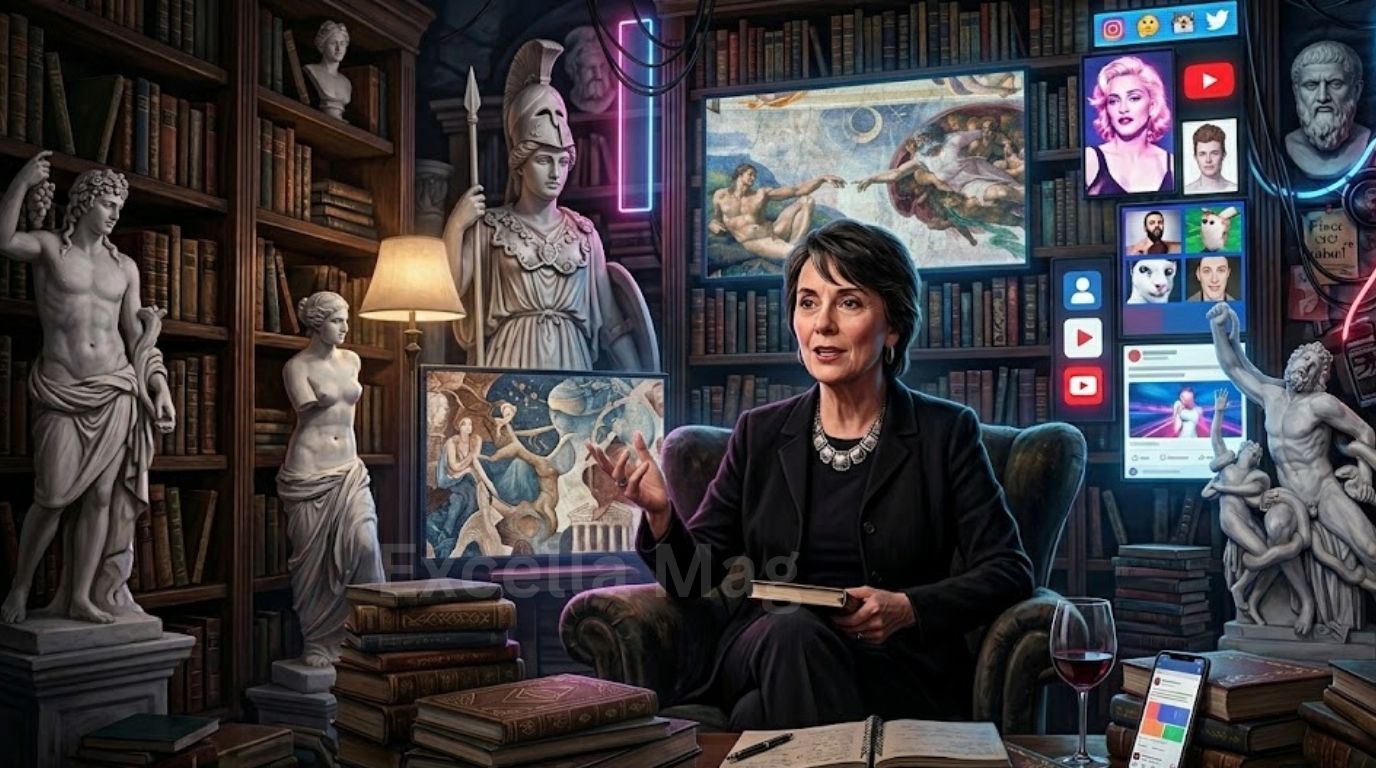
A Pagliaesque argument often feels theatrical and confrontational. It may combine references to ancient mythology, classical literature, Hollywood celebrity culture, sexual politics, and modern media trends within the same discussion. The style is known for dramatic language, sweeping cultural observations, and strong personal conviction.
The term is now used beyond discussions about Paglia herself. Journalists, critics, bloggers, and commentators sometimes use it to describe anyone whose writing or speaking style resembles that same fearless, intellectually combative energy.
The Origins of the Term and Its Cultural Background
The popularity of the term emerged largely after the publication of Paglia’s influential book, Sexual Personae, which explored art, sexuality, and cultural history through an unconventional lens. The book challenged many academic assumptions at the time and sparked intense debate across universities and media platforms.
During the late twentieth century, academia was becoming increasingly specialized and politically sensitive. Paglia stood out because she approached cultural criticism with a highly theatrical and rebellious tone. Instead of writing in dry academic language, she embraced vivid imagery, emotional rhetoric, and controversial claims.
This helped create a recognizable intellectual identity that eventually inspired the adjective “Pagliaesque.” The term became associated not just with her ideas, but with her method of cultural analysis itself.
Many critics and supporters alike acknowledged that her writing had a unique rhythm and intensity. Even readers who disagreed with her often admitted that her arguments were difficult to ignore because they were written with passion and confidence.
The rise of cable television debates, online opinion journalism, podcasts, and social media later amplified interest in this type of commentary. Strong personalities became central to public discourse, making Pagliaesque communication styles increasingly visible across digital culture.
Readers interested in Paglia’s academic background and published work can explore her profile through Encyclopaedia Britannica.
Core Characteristics of a Pagliaesque Style
One of the defining traits of Pagliaesque writing is intellectual fearlessness. It rarely avoids controversial subjects and often directly challenges accepted social narratives. The tone is usually assertive rather than cautious, which immediately distinguishes it from more neutral academic commentary.
Another key characteristic is interdisciplinary thinking. A Pagliaesque argument may connect psychology, classical mythology, religion, cinema, literature, and politics within a single discussion. This broad analytical style creates a sense of cultural depth that many readers find compelling.
Emotion also plays a major role. Unlike detached academic writing, Pagliaesque commentary often uses dramatic phrasing and emotionally intense language to strengthen its impact. The goal is not merely to inform but to provoke reflection and reaction.
The style also tends to reject ideological conformity. Instead of aligning fully with one political tribe or intellectual movement, Pagliaesque thinkers often criticize multiple sides simultaneously. This unpredictability contributes to both admiration and backlash.
Another important feature is cultural pattern recognition. Rather than focusing only on isolated events, Pagliaesque analysis often attempts to identify broader civilizational trends connected to art, gender dynamics, media behavior, celebrity culture, and social transformation.
Why the Term Still Matters in Modern Media
Although the term originated decades ago, its relevance has arguably increased in the digital age. Modern online culture rewards strong opinions, memorable phrasing, and emotionally charged commentary. Many influential commentators today use communication styles that resemble Pagliaesque rhetoric even if they never directly reference Paglia herself.
Social media platforms have intensified ideological conflict, making audiences more attracted to voices that appear intellectually independent or anti-establishment. A Pagliaesque approach often appeals to readers who are frustrated with predictable political narratives and repetitive cultural commentary.
Podcast culture also contributed to the revival of long-form intellectual discussion. Unlike short news clips, podcasts allow speakers to move between philosophy, psychology, history, entertainment, and politics in expansive ways that resemble Paglia’s own communication style.
In many ways, the internet created the perfect environment for Pagliaesque discourse. Viral debates now frequently reward emotional intensity, intellectual confidence, and cultural criticism packaged in bold language.
However, critics argue that this style can sometimes prioritize provocation over nuance. Because of its confrontational nature, Pagliaesque commentary may oversimplify complex social issues or encourage performative outrage rather than constructive dialogue.
Still, the term remains culturally significant because it represents a recognizable approach to public intellectualism that continues to shape modern media discussions.
Examples of Pagliaesque Commentary in Popular Culture
Many modern commentators, writers, and cultural critics display traits that audiences describe as Pagliaesque. These individuals often blend cultural analysis with emotionally forceful language while rejecting strict ideological labels.
For example, some long-form podcast hosts analyze movies, celebrity scandals, gender politics, and internet culture through sweeping historical or psychological frameworks. Others use classical references to critique modern entertainment trends or social behavior.
The influence can also be seen in opinion journalism. Certain columnists deliberately write provocative essays that challenge mainstream narratives while using literary references and dramatic argument structures. Whether praised or criticized, these pieces attract attention because they break away from cautious corporate-style commentary.
Film criticism also occasionally adopts a Pagliaesque tone. Critics may interpret blockbuster movies not simply as entertainment but as reflections of deeper social anxieties, sexual tensions, or civilizational myths.
Even YouTube creators and independent bloggers sometimes embrace this approach. Video essays analyzing masculinity, celebrity culture, feminism, artistic decline, or digital identity often echo the same intense cultural framing associated with Pagliaesque analysis.
The term therefore evolved far beyond a single person. It now functions as a broader descriptor for bold cultural criticism that combines intellectual ambition with emotional force.
Criticism and Controversy Around the Pagliaesque Approach
Despite its influence, the Pagliaesque style remains deeply controversial. Critics argue that it can become overly theatrical, excessively contrarian, or intentionally provocative for attention. Some scholars believe the style values spectacle more than balanced analysis.
Others argue that emotionally charged commentary risks oversimplifying serious social issues. Because Pagliaesque arguments often rely on broad historical narratives, opponents sometimes claim they ignore important social complexities or empirical evidence.
There is also debate about whether intellectual provocation genuinely encourages free thinking or simply fuels polarization. In today’s online culture, controversial statements spread quickly and may attract engagement regardless of factual accuracy.
Supporters, however, argue that the style serves an important cultural purpose. They believe society benefits from intellectual voices willing to question dominant narratives and challenge institutional thinking. According to this perspective, Pagliaesque commentary keeps public debate alive by resisting ideological conformity.
The tension between provocation and responsibility is one reason the term continues to generate discussion. People may disagree about the conclusions, but they rarely ignore the arguments themselves.
The Connection Between Pagliaesque Thinking and Modern Internet Culture
Modern internet culture thrives on personality-driven commentary, and this environment naturally overlaps with Pagliaesque communication styles. Platforms such as YouTube, X, podcasts, and independent newsletters reward creators who speak confidently and develop recognizable intellectual identities.
Unlike traditional academic publishing, digital media encourages emotionally engaging storytelling and opinion-driven analysis. Audiences increasingly seek commentators who appear authentic, rebellious, and intellectually independent.
This shift explains why Pagliaesque rhetoric still resonates today. Many online creators blend philosophy, pop culture, psychology, politics, and personal reflection in ways similar to Paglia’s interdisciplinary approach.
At the same time, internet culture also exaggerates some of the style’s weaknesses. Outrage algorithms reward conflict and emotional intensity, which can push commentators toward increasingly extreme rhetoric.
As a result, modern audiences often struggle to separate thoughtful cultural criticism from performative controversy. This tension mirrors many of the debates that originally surrounded Paglia herself decades ago.
Nevertheless, the continued popularity of intellectually provocative commentary suggests that the desire for bold independent analysis remains strong.
Why Understanding the Term Matters Today
Understanding the meaning of “Pagliaesque” helps readers better interpret modern cultural commentary and media behavior. The term represents more than a personality; it symbolizes a broader style of public intellectual discourse that values intensity, independence, and interdisciplinary thinking.
In a media environment flooded with repetitive content, many readers gravitate toward voices that feel distinctive and intellectually ambitious. Even when controversial, Pagliaesque commentary often captures attention because it challenges audiences emotionally and intellectually at the same time.
The term also highlights the evolving relationship between academia, journalism, entertainment, and digital media. Intellectual analysis is no longer limited to universities or newspapers. Today, cultural criticism appears across podcasts, video essays, independent blogs, and social platforms.
Whether admired or criticized, the Pagliaesque style continues influencing how modern commentators discuss gender, culture, art, politics, celebrity identity, and social change.
Its lasting relevance comes from one simple reality: people remain fascinated by bold thinkers who refuse to sound predictable.
FAQs
What does Pagliaesque mean?
It describes a bold, provocative, and intellectually intense style inspired by Camille Paglia.
Who is Camille Paglia?
She is an American cultural critic, author, and academic known for controversial cultural analysis.
Is Pagliaesque considered positive or negative?
The term can be either complimentary or critical depending on the context.
Why is Pagliaesque writing controversial?
Because it often challenges mainstream ideological views using confrontational arguments.
What subjects are commonly discussed in Pagliaesque commentary?
Culture, sexuality, feminism, politics, media, art, and social behavior are common themes.
Can modern influencers be described as Pagliaesque?
Yes, especially those using provocative interdisciplinary cultural analysis online.
Is Pagliaesque writing academic?
It combines academic ideas with emotional and highly accessible public commentary.
Why does the term still matter today?
Because bold independent cultural criticism remains highly influential in digital media
You can also visit: Excella Mag

