

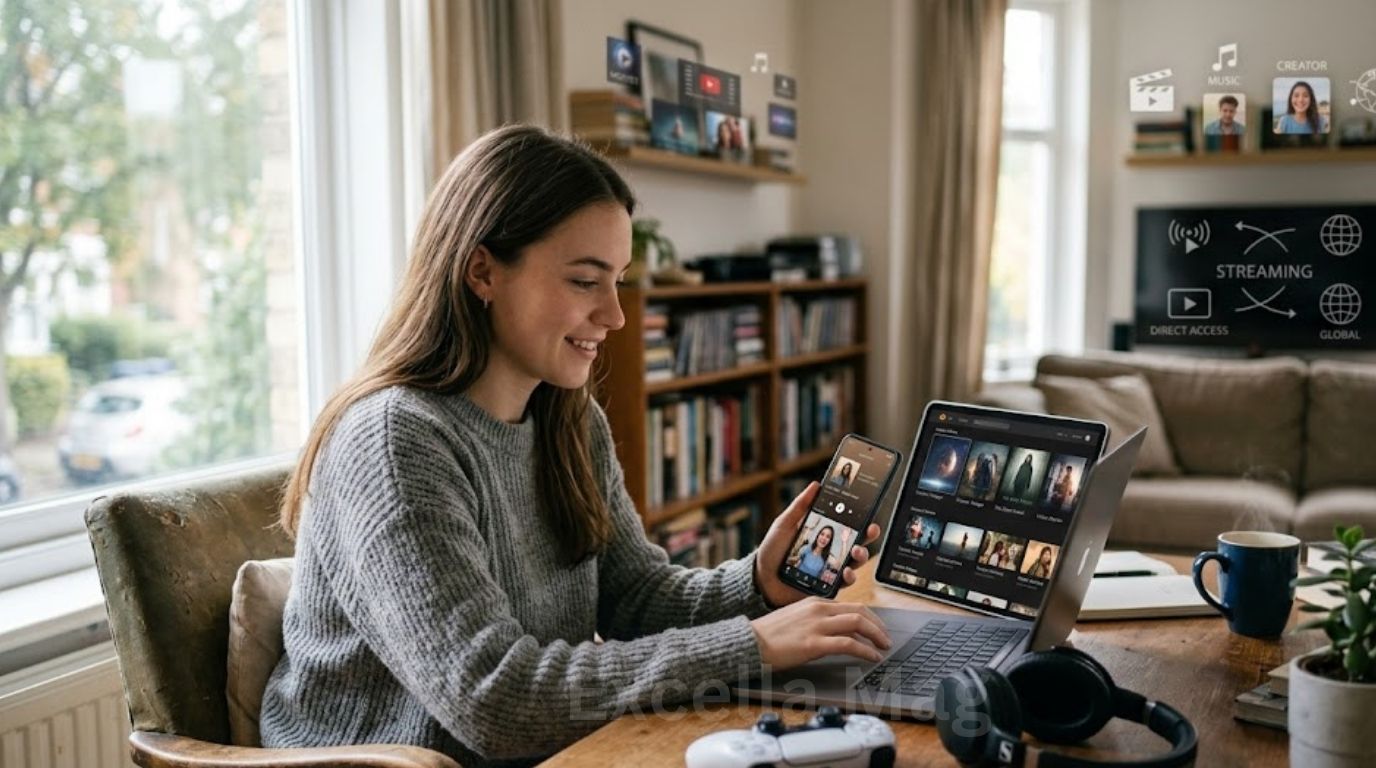
Think about the last time you paid for something entertainment-related online. Maybe you bought a song on iTunes, streamed a show on Netflix, purchased a game on Steam, or licensed a beat from an independent producer halfway across the world. What you experienced in those moments — that seamless exchange of content, money, and access — is exactly what an entertainment marketplace is built to do. And in 2025, this concept has evolved far beyond what most people realize.
The entertainment industry has always been about connection — connecting artists with audiences, stories with viewers, music with fans. But for decades, that connection came with a heavy price tag of middlemen: record labels, film studios, distribution companies, and broadcasters who controlled not just what content got seen, but how much creators actually earned from it. That model is crumbling. In its place, a new kind of digital economy is rising — one built on open platforms, direct transactions, and the radical idea that creators deserve to own and profit from their work on their own terms.
The global entertainment and media industry is on a staggering growth curve. According to Business Wire, the worldwide movies and entertainment market is expected to expand from $101.33 billion in 2024 to over $201 billion by 2033. This growth isn’t coming from legacy studios alone — it’s being powered by independent creators, digital platforms, and the explosion of entertainment marketplaces that are rewriting every rule in the book.
This article breaks down what entertainment marketplaces actually are, how they’re transforming the content economy, who’s winning and who’s losing, and where everything is headed next. Whether you’re a creator, a consumer, or just someone who loves great content, this shift affects you directly.
What Is an Entertainment Marketplace, Really?
The term “entertainment marketplace” gets thrown around loosely, but it’s worth defining clearly because it covers a much wider landscape than most people assume. At its core, an entertainment marketplace is any digital platform that enables the buying, selling, licensing, streaming, or distribution of entertainment content between creators and consumers — often without a traditional gatekeeper in the middle.
This includes streaming giants like Netflix and Spotify, but it also includes Gumroad, where independent filmmakers sell their short films directly. It includes Steam’s storefront for game developers, Bandcamp for musicians, Patreon for content creators building subscription communities, and even NFT-based platforms where artists sell tokenized music or artwork to fans who literally own a piece of the content. Each of these represents a different flavor of the same idea: a marketplace where entertainment is the product being exchanged.
What makes modern entertainment marketplaces genuinely revolutionary is the shift in who holds power. In traditional distribution, a label or studio acted as both gatekeeper and financier deciding what got made, what got distributed, and how royalties were split. On today’s marketplaces, a musician in Karachi can release a track, set their own price, and collect revenue directly from thousands of fans worldwide, all without ever signing a record deal. That’s not just a business model change it’s a cultural shift.
The Rise of the Creator Economy and Its Role in Entertainment Marketplaces
You can’t talk about entertainment marketplaces without talking about the creator economy, because the two have become completely intertwined. The creator economy ecosystem of independent content creators who build audiences and monetize their work through digital platforms is now valued at approximately $253 billion worldwide, with analysts expecting it to surpass $2 trillion by 2035. That is an extraordinary number for an economy built by individuals with cameras, microphones, and laptops.
Over 207 million active content creators exist globally today, and they are producing and distributing entertainment through marketplaces at a scale that no single studio could match. Video streaming platforms like YouTube and Twitch dominate revenue generation in this space due to their massive user reach and layered monetization systems. But what’s changing rapidly is where creators are choosing to sell their most valuable work. Instead of giving platforms a majority cut of ad revenue, many are pivoting toward direct-to-fan models on platforms like Patreon, Substack, and Gumroad, where they keep significantly more of each dollar earned.
This shift matters because it changes what entertainment marketplaces need to offer. Creators aren’t just looking for distribution anymore — they want control, data, and fair compensation. The platforms that understand this are thriving. The ones that don’t are watching their best creators walk out the door.
How Streaming Platforms Became the Dominant Force in Content Consumption
Streaming didn’t just change how we watch TV — it fundamentally altered how content gets valued, priced, and consumed. The numbers tell a remarkable story. According to J.P. Morgan’s analysis of streaming data, streaming as a whole exceeded legacy broadcast and cable for the first time in 2025 in terms of total US TV viewing time share. That milestone, unimaginable just a decade ago, signals that the entertainment marketplace isn’t just growing — it has already become the primary way people access content.
Netflix, Disney+, Amazon Prime Video, Apple TV+, and their regional equivalents have created a subscription economy around video content that generates billions in recurring revenue. But the streaming wars have also revealed a critical challenge: consumers have a saturation point. People are consolidating subscriptions, canceling services they use sparingly, and becoming more deliberate about where they spend. This has pushed streaming platforms to think more like marketplaces offering bundled packages, tiered pricing, and live content to differentiate themselves and retain subscribers.
The real disruption, though, is coming from below. YouTube continues to grow faster than almost every other streaming platform precisely because it functions as a true open marketplace. Any creator can upload content, build an audience, and earn revenue. This open architecture creates a volume and diversity of content that no curated platform can replicate, which is why YouTube’s share of total streaming time keeps climbing even as its competitors spend billions on exclusive content.
Monetization Models That Are Reshaping the Entertainment Marketplace
One of the most important developments in the entertainment marketplaces is the diversification of how money actually flows. For most of entertainment history, there were basically two models: you either sold content directly (buy a CD, pay for a movie ticket) or you made it free and monetized through advertising. Both models had massive inefficiencies, and both disproportionately favored established players over independent creators.
Today, the range of monetization models available within entertainment marketplaces is genuinely transformative. Subscription Video on Demand (SVOD) platforms like Netflix charge recurring fees for unlimited access. Transactional Video on Demand (TVOD) models let consumers pay per piece of content, which works well for premium releases. Ad-supported (AVOD) platforms like YouTube offer free access in exchange for viewing ads, with a share going back to creators. And then there are hybrid models, like Hulu’s combination of ads and subscriptions, which aim to capture multiple audience segments simultaneously.
Beyond video, the music marketplace has evolved dramatically. Spotify’s streaming model pays fractions of a cent per stream, which has frustrated artists for years. In response, platforms like Bandcamp and Patreon have given musicians an alternative direct sales and fan subscriptions that return far more per transaction. A musician selling 1,000 albums at $10 each on Bandcamp earns roughly $8,500 after fees. Getting to 8,500 streams on Spotify earns less than $40. The marketplace arithmetic is stark, and smart creators are paying attention.
The Role of AI in Transforming Entertainment Marketplaces
Artificial intelligence is not a distant future consideration for entertainment marketplaces it is already embedded in how content is created, recommended, priced, and distributed. And its impact is accelerating faster than most industry analysts predicted.
On the consumption side, AI-powered recommendation engines are the invisible engines driving engagement on every major entertainment platform. Netflix’s algorithm, which tailors not just recommendations but the actual artwork shown for each title based on individual viewing behavior, is a masterclass in personalized marketing. Spotify’s Discover Weekly playlist has introduced more people to new artists than traditional radio ever could, because it understands individual taste at a granular level that no human curator can match. These systems are why entertainment marketplaces generate such powerful retention — once a platform knows what you love, it becomes very hard to leave.
On the creation side, generative AI is causing a genuine disruption in the content moat that major studios have historically relied on. The prior decade was defined by disruption in content distribution (streaming replacing TV). The next decade will be defined by disruption in content creation itself, as AI tools allow smaller players to produce high-quality music, video, and visual content at a fraction of the cost that once required large production budgets. This democratization is good for independent creators and entertainment marketplaces, even as it creates existential anxiety for legacy studios.
Blockchain, NFTs, and the Ownership Revolution
If AI is changing how entertainment is made, blockchain technology is changing who owns it. The concept of verifiable digital ownership — made possible through NFTs (non-fungible tokens) — has introduced a genuinely new paradigm into the entertainment marketplace: the idea that fans can own authentic, unique pieces of content rather than just consuming it.
The music NFT market is one of the most compelling examples of this. Sony Music Entertainment partnered with Blockparty to release exclusive music NFTs for fans, signaling major label interest in blockchain-based ownership models. The global NFT market is projected to grow by $84 billion between 2025 and 2029, driven in large part by entertainment applications. Artists who sell NFTs of their music, album artwork, or behind-the-scenes footage create a new kind of fan relationship one where ownership and fandom overlap.
For filmmakers, the implications are equally interesting. Rather than relying on a studio for funding, independent filmmakers can now essentially crowdfund production through NFT sales, giving investors a tokenized stake in the film’s success. This decentralizes the entire production pipeline in a way that was simply not possible before. Platforms like Theta Network have gone further, creating watch-to-earn ecosystems where viewers earn cryptocurrency by watching content and contributing bandwidth to improve streaming quality for others.
The Challenges That Entertainment Marketplaces Still Need to Solve
For all the excitement, entertainment marketplaces face real structural challenges that haven’t been fully solved and honest coverage requires acknowledging them. The first is fair creator compensation. Despite all the progress, the majority of creators on most platforms earn very little. According to inBeat Agency’s research, only about 4% of the 207 million active creators globally earn over $100,000 per year. The marketplace structure that empowers the top tier can simultaneously deepen inequality for the vast majority of participants.
Content discovery remains another persistent problem. As the number of creators and pieces of content on marketplaces explodes, the challenge of helping the right audience find the right content intensifies. Algorithms help, but they also create filter bubbles that favor already-popular content, making it genuinely difficult for new voices to break through. Entertainment marketplaces that solve discovery — not just for mainstream content but for niche, diverse, and emerging creators will have a significant competitive advantage.
Piracy and intellectual property protection continue to pose challenges, particularly as content travels across international marketplaces where enforcement varies widely. The rise of NFTs offers some technological solutions through blockchain-based provenance tracking, but widespread adoption is still years away for most content categories. And the question of platform dependency — what happens to creators when a marketplace changes its algorithm, fee structure, or terms of service remains a genuine vulnerability for anyone building their livelihood on someone else’s platform.
What This Means for Consumers: More Choice, More Control
From a pure consumer perspective, the entertainment marketplace revolution has been largely positive. The era of waiting for a specific TV channel to air a specific show, or being limited to whatever was stocked at the local video rental store, feels almost incomprehensible to younger audiences. Today’s consumers access vast libraries of music, film, games, and creator content on demand, from anywhere, on any device.
More importantly, entertainment marketplaces have created price competition and model diversity that give consumers genuine options. If you’re a casual movie watcher, an ad-supported tier on a streaming service might suit you perfectly. If you’re a passionate fan of an independent musician, paying directly on Bandcamp or Patreon creates a relationship with that artist that feels meaningful and direct. Consumers increasingly understand that how they choose to pay for entertainment has real consequences for which creators survive and thrive.
The line between consumer and creator is also blurring in fascinating ways. Platforms like TikTok and Instagram have made it trivially easy for anyone to publish entertainment content, turning hundreds of millions of consumers into occasional or regular creators. This participatory dimension of entertainment marketplaces, where the audience is also the supply side, is genuinely new in the history of media.
The Future of Entertainment Marketplaces: What’s Coming Next
Looking ahead, several trends will define the next phase of entertainment marketplace evolution. Live commerce — the fusion of live streaming and real-time purchasing — is already massive in Asia and growing rapidly in Western markets. Platforms that combine entertainment with seamless buying experiences are creating a new category that sits between shopping and content consumption.
The online entertainment market is projected to reach $338.96 billion by 2034, growing at nearly 13% annually. Emerging technologies including augmented reality, virtual reality, and spatial computing, will create immersive entertainment experiences that current marketplace infrastructure isn’t fully equipped to handle creating significant opportunities for new entrants. Virtual concerts, interactive storytelling, and AI-generated personalized entertainment are not science fiction; they are actively being developed and will reach mainstream audiences within this decade.
The entertainment marketplace of tomorrow will likely be significantly more decentralized, more personalized, more interactive, and more financially fair to creators than the one we have today. The companies that will win are not necessarily the biggest ones — they’re the ones that figure out how to build genuine trust with both creators and consumers simultaneously.
Frequently Asked Questions (FAQs)
Q1: What is an entertainment marketplace? An entertainment marketplace is a digital platform where entertainment content — music, films, games, or creator content — is bought, sold, licensed, or streamed between creators and consumers, often without traditional gatekeepers.
Q2: How do entertainment marketplaces make money? They earn through subscription fees, transaction commissions, advertising revenue, licensing fees, or platform cuts from creator sales — and most use a combination of these models.
Q3: Which entertainment marketplace pays creators the most? Direct-to-fan platforms like Bandcamp and Patreon generally return the highest percentage of revenue to creators compared to ad-share platforms like YouTube or streaming royalties from Spotify.
Q4: Are NFT-based entertainment marketplaces safe to use? Reputable NFT platforms with verified transactions are generally safe, but buyers should research platforms carefully and understand that NFT values can be highly volatile.
Q5: How is AI changing entertainment marketplaces? AI powers recommendation engines, personalizes content delivery, enables new forms of content creation, and helps platforms better match audiences with relevant content.
Q6: Can independent creators actually make a living on entertainment marketplaces? Yes, though only a small percentage do — success typically requires building a loyal niche audience, diversifying income streams, and treating content creation as a real business.
Q7: What is the difference between SVOD, AVOD, and TVOD? SVOD is subscription-based (Netflix), AVOD is ad-supported and free (YouTube free tier), and TVOD is pay-per-view (buying a film on Amazon Prime Video).
Q8: How do entertainment marketplaces handle piracy and copyright protection? Through a combination of digital rights management (DRM) technology, content ID systems, takedown procedures, and increasingly, blockchain-based ownership verification.
Q9: What role does the creator economy play in entertainment marketplaces? The creator economy is the supply side of entertainment marketplaces — the 200+ million creators globally who produce the content that platforms distribute and monetize.
Q10: Will traditional entertainment companies survive the rise of digital marketplaces? Yes, but only if they adapt the studios and labels that embrace direct-to-consumer models, fair creator partnerships, and technology integration are already repositioning successfully.
Final Thoughts
The entertainment marketplace isn’t a trend; it’s the permanent infrastructure of how human creativity gets shared, valued, and compensated in the digital age. Every time you stream a song, buy a game, tip a creator, or purchase an NFT, you’re participating in an ecosystem that is actively replacing a century-old media distribution system with something more direct, more democratic, and more dynamic.
The transition is messy and imperfect. Creators still fight for fair pay. Piracy remains a problem. Discovery algorithms can amplify inequality as much as they dissolve it. But the direction of travel is clear: power is shifting from institutions to individuals, from gatekeepers to open platforms, from passive consumption to active participation.
For anyone building, creating, or consuming in this space, understanding how entertainment marketplaces work and where they’re going isn’t just interesting. It’s essential.
Read More: Excellamag.com

