

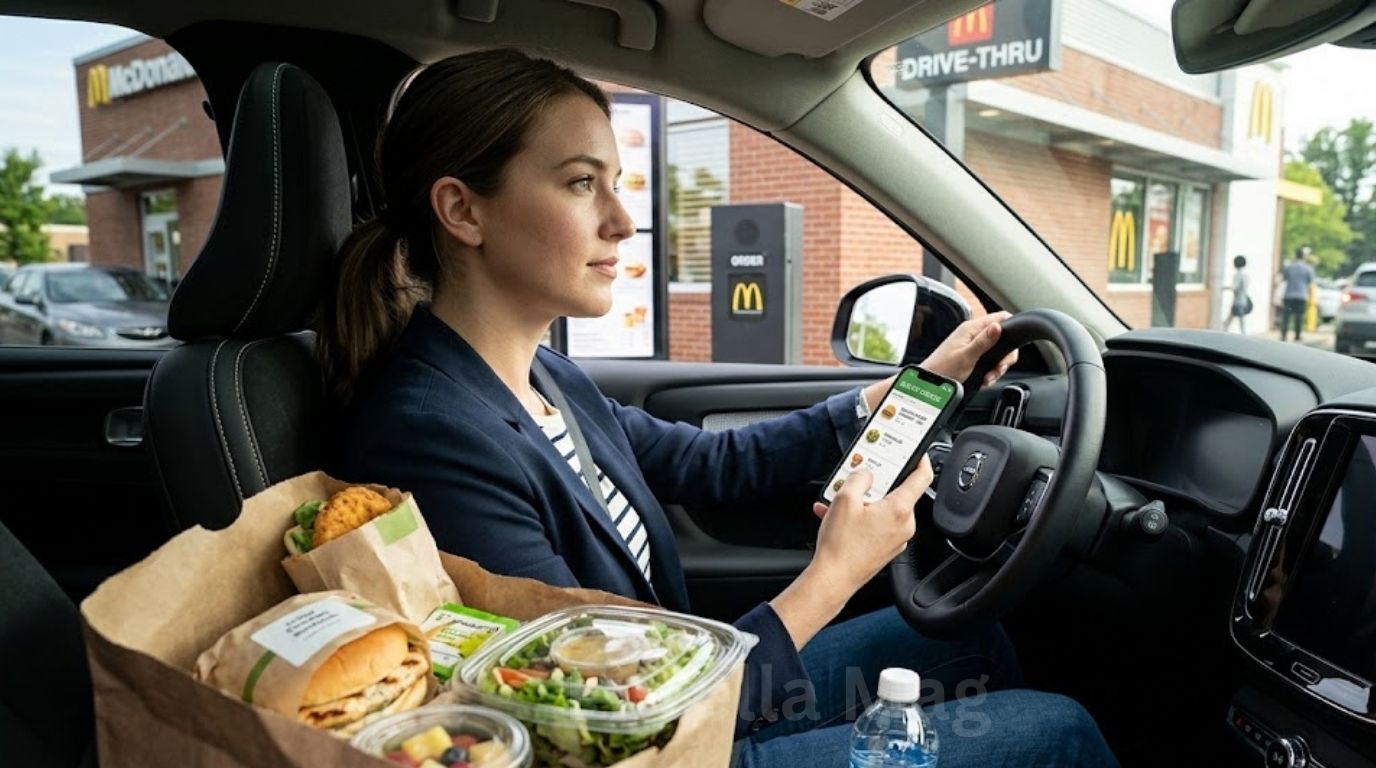
Let’s be completely honest with each other for a second. You’re trying to eat well, you’re watching your calories, and then life happens a long drive, a hectic workday, kids demanding food right now — and suddenly you’re staring at a drive-through menu feeling like every option is going to ruin your progress. Sound familiar? You’re not alone, and more importantly, you’re not as stuck as you think.
The idea that fast food and weight loss are total opposites is one of the most stubborn myths in nutrition. Yes, the fast food industry has built its empire on cheap oils, oversized portions, and calorie bombs dressed up as value meals. But the landscape in 2025 has genuinely shifted. According to McDonald’s CEO Chris Kempczinski, 2025 was dominated by “protein mania” — a consumer-driven demand for high-protein, lower-calorie menu items that even the biggest chains couldn’t ignore. From Chipotle’s customizable bowls to Taco Bell’s surprisingly fiber-rich Cantina options, smart ordering has never been more possible.
But here’s where most “healthy fast food” articles let you down: they give you a generic list of “grilled chicken good, fried bad” and call it a day. What you actually need to know is which specific items at which specific chains are worth ordering, what the hidden calorie traps look like, and how to customize your order like someone who genuinely understands nutrition — not just someone who picked the salad option out of guilt. That’s exactly what this guide delivers.
Why Most “Healthy” Fast Food Items Are Not What They Seem
Before we get into the good stuff, we need to talk about something that almost no fast food guide addresses honestly: the gap between how menu items are marketed and what they actually contain. This isn’t about paranoia — it’s about understanding the game so you can play it better.
Salads are the most obvious example. A grilled chicken salad sounds like the responsible choice, and it often is — until you pour on the dressing. Research published via HelpGuide shows that creamy dressings can add 200 to 400 calories to a salad in a single packet, along with enormous amounts of sodium and sugar. Panera Bread bowls, which carry a premium “fresh” image, frequently exceed 2,000 mg of sodium — that’s close to an entire day’s recommended limit in one sitting. Subway’s famous health halo is similarly misleading: a footlong Italian BMT can carry over 3,000 mg of sodium, which is more than what most adults should consume in an entire day.
Then there are the beverages. Chains have become extremely clever about selling you “refreshers,” flavored iced coffees, and smoothies that feel light and wholesome but are loaded with sugar. A medium flavored drink at many chains can pack 50 to 70 grams of added sugar — nearly double the daily recommended limit for adults. The FDA recommends keeping sodium under 2,300 mg daily and added sugar below 50 grams, but a single thoughtless fast food order can shatter both targets before you’ve had a snack. The point isn’t to avoid fast food entirely. The point is to walk in with your eyes open.
The Nutrition Rules That Actually Matter When Ordering
Before breaking down specific menu items, it helps to understand the nutritional framework that makes a fast food order genuinely weight-loss friendly. Most people focus almost entirely on calories, but for sustainable weight loss, three other factors matter just as much — and competitors rarely explain this clearly enough.
Protein is your most powerful tool. High-protein meals suppress hunger hormones and keep you full far longer than carb-heavy alternatives of the same calorie count. When you order grilled chicken over a fried sandwich, you’re not just saving calories — you’re getting a meal that will keep you satisfied for hours instead of hungry again in 90 minutes. According to research cited by Hers Health, higher protein intake is consistently linked to more successful weight loss outcomes, which is why protein-forward orders dominate every evidence-based fast food guide.
Fiber changes everything. A fascinating 2023 study found that people eating a highly processed diet absorbed about 95% of their calories, while those eating a less processed, higher-fiber diet only absorbed about 89% — meaning roughly 116 calories per day escaped the body entirely through digestion. Fast food is notoriously low in fiber, which is why finding fiber-rich options (beans, vegetables, whole grains) is genuinely important, not just nutritionally fashionable. When you see an item with 10+ grams of fiber, that’s a real metabolic advantage.
Sodium causes bloating and water retention that can mask real weight loss progress. Many people eating correctly still see the scale stagnate because high-sodium fast food meals cause the body to retain significant amounts of water. This doesn’t mean you’re gaining fat — but it can be demoralizing if you don’t understand the mechanism. Prioritizing lower-sodium orders helps your actual progress show up on the scale.
Chain-by-Chain: The Low-Calorie Orders You’re Probably Missing
Chipotle — The Best Build-Your-Own Equation
Chipotle is genuinely one of the best fast food environments for weight loss, but only if you understand exactly where the calories hide. A chicken burrito bowl without rice — loaded with fajita vegetables, pico de gallo, lettuce, and black beans — can sit comfortably around 400 to 450 calories with 35 to 45 grams of protein. That’s an exceptional meal by any nutritional standard. The beans alone add nearly 8 grams of fiber, which significantly slows digestion and keeps you satisfied.
The traps at Chipotle are specific and avoidable. Cheese adds around 110 calories. Sour cream adds another 110. Guacamole, despite being made from healthy fats, adds 230 calories — more than half your meal’s calorie count if you’re trying to stay under 500. The Chipotle nutrition calculator available on their website lets you build your order and see the exact numbers in real time, which is a powerful tool worth using before you get to the register.
Taco Bell — The Surprising Weight Loss Winner
Taco Bell gets unfairly dismissed as junk food, but its Cantina Chicken Bowl is legitimately one of the most nutritious fast food options in America right now. With 25 grams of protein, 11 grams of fiber, under 500 calories, and only 3 grams of sugar, it checks every box that a dietitian would care about. Finding 11 grams of fiber in a fast food meal is exceptionally rare — most items deliver 2 to 4 grams at best.
Taco Bell’s “Fresco Style” customization is another underused tool. Ordering Fresco Style replaces cheese and sour cream with a fresh salsa, cutting 50 to 100 calories and significant saturated fat without sacrificing the core flavor of the meal. For people who want something lighter, two Fresco Style tacos come in around 300 to 350 calories while still delivering a satisfying, flavored meal.
Chick-fil-A — The Grilled Protein Champion
Chick-fil-A’s grilled offerings are consistently among the best protein-to-calorie ratios in fast food. The Grilled Nuggets (8-piece) deliver a remarkable 25 grams of protein at just 130 calories, making them arguably the best value-per-calorie protein source in the entire fast food category. Pair these with the Kale Crunch Side Salad, which adds fiber and micronutrients without significant calories, and you have a nutritionally complete meal well under 400 calories.
The Market Salad with Grilled Nuggets is another standout — 340 calories, 32 grams of protein, 6 grams of fiber, with berries and almonds that provide antioxidants and healthy fats. Registered dietitian Wan Na Chun, MPH, RD specifically recommends this combination for its flavor, texture variety, and nutritional density. The main caution at Chick-fil-A is sodium — even the grilled items tend to run relatively high, so pairing with water rather than any sweetened beverage is particularly important here.
McDonald’s — The Hidden Gems
McDonald’s deserves more credit than it gets when it comes to specific lower-calorie options. The Egg McMuffin remains a genuinely solid breakfast choice — 310 calories and 17 grams of protein make it one of the highest-protein, most calorie-efficient breakfast sandwiches in fast food. For context, that 17-gram protein figure is impressive for a 310-calorie item; the ratio holds up even against dedicated breakfast sandwich competitors.
For non-breakfast ordering, the grilled chicken options and side salads can form a reasonable meal, but McDonald’s requires the most careful customization of any major chain. The Big Breakfast with Hotcakes — a meal that sounds indulgent but could tempt you — contains 2,070 mg of sodium and 1,340 calories, which is essentially most people’s entire daily budget in a single meal. McDonald’s has detailed nutrition information available on their official website, and checking it in advance pays off significantly.
Subway — Customization Wins, Ignorance Loses
Subway’s entire premise is customization, which makes it one of the best environments for weight-loss-focused ordering — but also one of the easiest places to accidentally inflate your calorie count. A 6-inch Turkey Breast sub on multigrain bread, loaded with vegetables and light mustard, comes in around 270 to 300 calories with 21 grams of protein. That’s legitimately excellent fast food nutrition.
The problem is the add-ons. Switching to a footlong doubles everything. Adding mayo, ranch, or the signature chipotle sauce adds 100 to 200 calories almost invisibly. Opting for the toasted cheese adds more fat and sodium. Subway’s best strategy for weight loss is simple: go 6-inch, go multigrain, go heavy on free vegetables (lettuce, tomato, cucumber, peppers, onions, spinach), use mustard or vinegar as dressing, and skip the cheese unless you’ve budgeted for it.
Wendy’s Chili — The Underdog That Deserves Recognition
Wendy’s chili is one of the most underrated weight-loss-friendly fast food items in existence, and it rarely gets the coverage it deserves. At 240 calories with 16 grams of protein and meaningful fiber from both meat and beans, it’s a warm, satisfying, genuinely nutritious meal option that almost nobody considers when they’re thinking about eating healthy at fast food chains. Topped with some crackers and paired with water, it makes a complete and filling lunch without any of the calorie anxiety.
The 5 Worst Fast Food Ordering Mistakes for Weight Loss
Understanding what to order is only half the equation. Knowing what sabotages your best intentions is equally important — and most articles gloss over this section entirely.
Ordering a combo meal is the single most consistent mistake. A sandwich that’s 400 calories becomes a 900-calorie meal the moment you add medium fries (around 320 calories) and a regular soda (around 200 calories). The individual item is fine. The combo format is a calorie multiplier that the industry designed very deliberately to increase spend and consumption simultaneously.
Treating drinks as neutral is another widespread mistake. As nutrition experts at EatThis.com note, sugary iced coffees and “refreshers” at fast food chains are loaded with sugar that spikes blood sugar, triggers hunger again within an hour or two, and adds hundreds of calories that most people simply don’t factor into their mental accounting.
Choosing salads without checking the dressing calories trips up even nutrition-aware eaters. Always ask for dressing on the side and use it sparingly — a tablespoon is typically sufficient to add flavor without the full calorie cost of an entire dressing packet.
Smart Customization Strategies That Actually Work
The best fast food orders for weight loss are rarely the standard menu items — they’re the customized versions. Most major chains will accommodate reasonable requests without charging extra, and knowing how to customize correctly is genuinely transformative.
Ask for sauces and dressings on the side, always. Skip the bun or bread when you’re trying to reduce carbohydrates — In-N-Out’s “Protein Style” burger wrapped in lettuce is a well-known example, but most chains will accommodate similar requests. At Chipotle, explicitly asking for “light” rice or skipping it entirely cuts 200 calories with zero sacrifice to protein or fiber. At any chain, swapping fries for a side salad or apple slices removes 300 to 400 calories from your meal in a single decision.
Prioritizing water or unsweetened iced tea over any other beverage is the single most impactful calorie-saving change you can make at any fast food restaurant. It sounds obvious, but the US Dietary Guidelines for Americans 2020–2025 consistently emphasize that liquid calories are the most underestimated source of excess energy intake in the American diet.
Frequently Asked Questions (FAQs)
Q1: What is the healthiest fast food option for weight loss? Chipotle’s grilled chicken salad bowl without rice (under 500 calories, 35g+ protein) and Chick-fil-A’s 8-piece Grilled Nuggets (130 calories, 25g protein) consistently rank as the best options.
Q2: Can you really lose weight while eating fast food? Yes — as long as your total weekly calories remain in a deficit, fast food can be part of a weight loss plan with smart ordering.
Q3: What should I avoid ordering at fast food restaurants when on a diet? Avoid combo meals, creamy sauces, sugary drinks, double or triple burgers, and anything labeled “Supreme” or “Deluxe” — these consistently add 200–500 hidden calories.
Q4: Is Taco Bell good for weight loss? Surprisingly yes — the Cantina Chicken Bowl offers 25g protein and 11g fiber under 500 calories, making it one of the most diet-friendly fast food meals available.
Q5: What is the lowest-calorie fast food meal I can order? Chick-fil-A’s 8-piece Grilled Nuggets at 130 calories and Wendy’s Chili at 240 calories are among the lowest-calorie complete fast food meal options.
Q6: Is Subway actually healthy for weight loss? A 6-inch turkey sub on multigrain with vegetables and mustard (~270 calories, 21g protein) is genuinely healthy — but footlongs, creamy sauces, and cheese can quickly undo that.
Q7: How do I reduce calories when ordering fast food? Skip the combo, choose grilled over fried, get dressings/sauces on the side, swap fries for a salad, and always drink water instead of soda or sugary drinks.
Q8: Which fast food chain has the best healthy menu overall? Chipotle and Cava consistently rank highest for build-your-own nutrition control, whole food ingredients, and high-protein customizable options.
Q9: Are fast food salads actually healthy? The salad base often is, but the dressing can add 200–400 calories — always ask for dressing on the side and use it sparingly.
Q10: What fast food breakfast is best for weight loss? McDonald’s Egg McMuffin (310 calories, 17g protein) is one of the most nutritionally balanced fast food breakfast options available.
Final Thoughts
The relationship between fast food and weight loss doesn’t have to be adversarial. The chains have changed, the menus have expanded, and your ability to customize an order that genuinely serves your health goals has never been greater. The gap isn’t between fast food and healthy eating anymore — it’s between informed ordering and uninformed ordering.
Know your protein targets. Watch the sodium. Treat the drink as part of your calorie budget. Customize without apology. And stop feeling guilty for eating where life takes you. With the right knowledge, a drive-through can be a pit stop on your health journey instead of a detour off it.
Read More: Excellamag.com

